 이 누리집은 대한민국 공식 전자정부 누리집입니다.

100 Years of Korean Fairy Tales in Hangeul
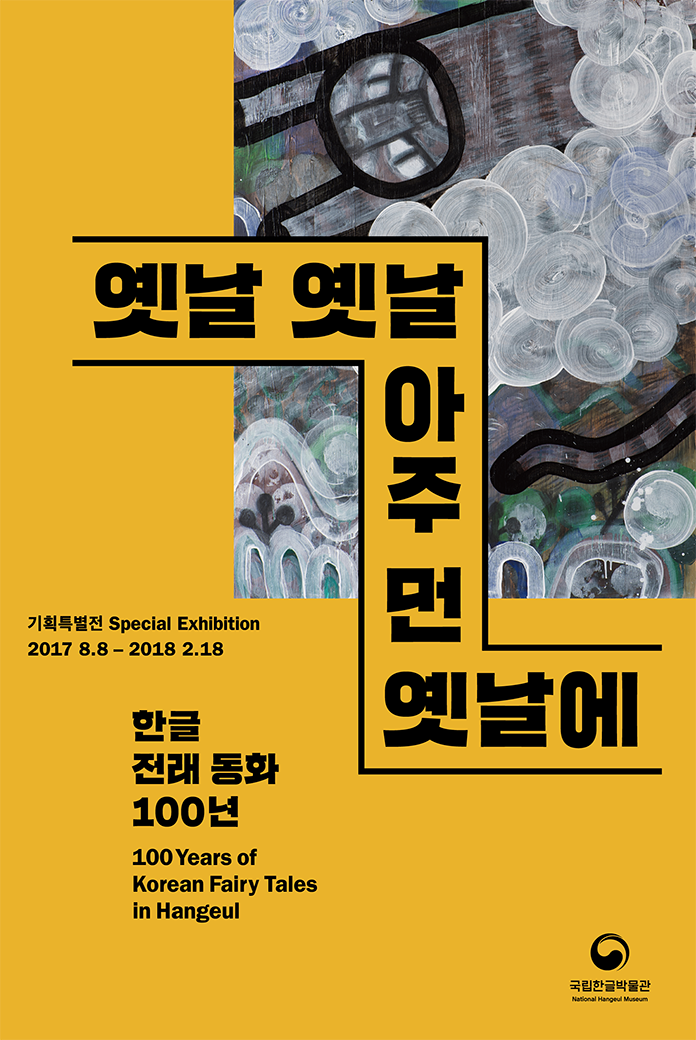
Introduction
Fairy tales orally passed down from one generation to another over a long time have been written down and adapted for children; these traditional folk tales constitute an inexhaustibly rich genre of children’s literature.
This exhibition looks back on the past 100 years or so when ancient Korean folk tales transmitted as part of myths, legends, folklore and classics were newly interpreted and written down as stories for children. The exhibition is divided into three parts: Part I, “History of Korean Fairy Tales in Hangeul”; Part II, “Transcription of Korean Fairy Tales in Hangeul”; and Part III, “Korean Fairy Tales in Hangeul: Stories of Lives Shared with Others.” They explore respectively a history of Korean fairy tales collected, transcribed and published since the early 20th century; the stylistic and technical characteristics of Korean fairy tales written down as stories for children; and the wisdom of shared lives contained in these stories.
The exhibition is intended to help its audiences to rediscover and enjoy diverse features of Korean fairy tales and appreciate their value.
-
PART I
History of Korean Fairy Tales in HangeulChildren’s literature in Korea budded at the dawn of the 20th century when the Korean people tried to achieve modern citizenship and increase national awareness. Korea faced political and cultural crises at the time as Japan escalated its colonizing drive amid intense imperial competition among the world’s powers and the subsequent influx of foreign influences. The crises provided the impetus for the Koreans to take note of the potential of children as their nation’s future leaders.
There was a growing awareness across Korean society that children deserve respect and attention as independent individuals and, as a result, children’s literature came to be recognized as an important means of education. The magazine Sonyeon [Boys], founded in 1908 by Choe Nam-seon, who would later become a famous writer and cultural activist, contributed to establishing the concept of “children’s literature” and “youth literature,” which referred to poems, songs and stories for children.
In the 1910s, the enlightenment movement for the Korean public as an effort to restore national sovereignty influenced the early efforts to collect and write down traditional folk tales for children in the nation’s own script, Hangeul. Newspapers and magazines actively published fairy tales written in Hangeul for children during the 1920s to the 1940s. Collections of ancient fairy tales gathered from across the country were also published.
During the 1950s to the 1960s, as the nation was recovering from wounds of colonial rule and war, traditional fairy tales for children continued to be published as part of efforts to increase cultural understanding among children and to nurture their love of country. From the 1970s, color illustrations became increasingly important for children’s books of fairy tales. Vibrant illustrations made the stories far more enjoyable for children and boosted their publication, eventually bringing about changes in the way fairy tales for children are written nowadays.
Collection of Korean Fairy Tales / 1926 / 13.0x19.5cm
 ▲ The oldest existing book of Korean Fairy Tales (written in Hangeul)
-
PART II
-
PART III
담당부서 : 전시운영과 (전화번호 : 02-2124-6324, 6327, 6335)
하단메뉴 영역
 예약하기
예약하기


